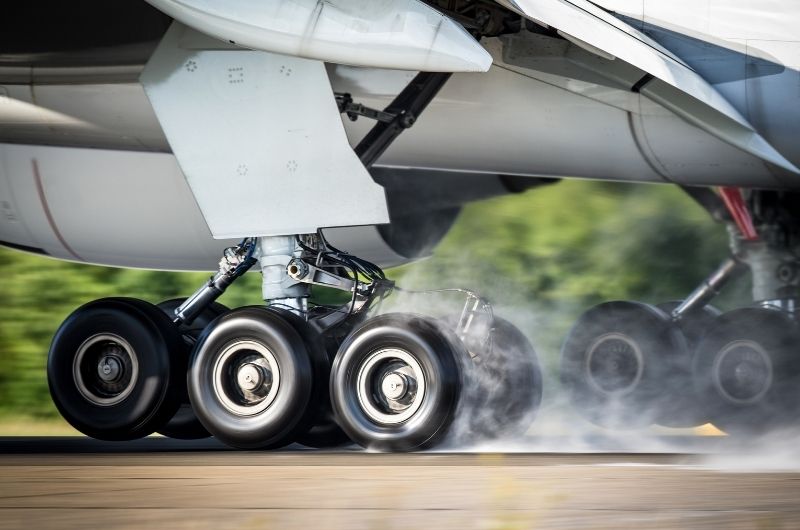
Every time an aircraft touches down at Hong Kong International Airport (HKIA)—a bustling hub handling over 400,000 flights annually—the landing gear bears the brunt of the impact, absorbing forces equivalent to several tons. These unsung heroes of aviation, composed of complex plane landing gear parts, are critical to ensuring safe takeoffs, landings, and everything in between. In Hong Kong, a regional powerhouse for aviation maintenance, repair, and overhaul (MRO), the expertise of local mro services company providers in sourcing, servicing, and innovating these components is nothing short of indispensable. This article explores the technical marvel of landing gear systems, how Hong Kong’s MRO sector keeps them in peak condition, and why choosing the right partner is non-negotiable for flight safety and operational efficiency.
Understanding Plane Landing Gear Parts: The Mechanics of Safety and Performance
The landing gear is a symphony of engineering, designed to withstand extreme forces while enabling smooth taxiing, takeoff, and landing. Let’s break down its key components and the innovations that drive its reliability.
The Anatomy of a Landing Gear System
At its core, a landing gear system comprises:
– Shock absorbers (oleo struts): These absorb the impact of landing, using a mix of oil and gas to cushion the aircraft. For a Boeing 777, each strut can endure forces up to 250,000 pounds.
– Wheels and brakes: High-temperature carbon brakes, capable of withstanding temperatures exceeding 1,000°C during hard landings, paired with reinforced wheels that must maintain integrity at speeds over 200 mph.
– Torque links and strut assemblies: These ensure the gear stays aligned and stable, preventing dangerous vibrations during taxiing.
Material advancements have revolutionized durability and efficiency. Modern jets like the Airbus A350 use titanium alloys and carbon-composite materials in gear components, reducing weight by up to 15% compared to older steel-based designs. This not only boosts fuel efficiency but also extends the lifespan of parts in Hong Kong’s humid, salt-laden coastal environment, where corrosion is a constant threat.
Balancing Legacy and Modern Fleets
Hong Kong’s airlines operate a mix of aging and new-generation aircraft. Cathay Pacific, for example, maintains a fleet that includes both Boeing 777s (in service since the 1990s) and state-of-the-art A350s. Servicing these diverse fleets requires specialized plane landing gear parts: older models like the 777 rely on mechanical brake systems, while newer A350s use electric-by-wire technology. MRO providers must stock a wide range of components, from legacy shock absorber seals to cutting-edge digital torque sensors, ensuring seamless support for both types.
Hong Kong’s MRO Excellence: Where Expertise Meets Innovation
Hong Kong’s MRO sector, anchored by world-class companies like HAECO (Hong Kong Aircraft Engineering Company) and HK Aero Engine Services, has built a reputation for precision and compliance. Here’s how they excel in maintaining landing gear systems.
The MRO Lifecycle: From Routine Checks to Emergency Repairs
MRO services follow a strict lifecycle to ensure safety:
1. Routine inspections: Scheduled after every 500 flights or six months, these involve visual checks for cracks, ultrasonic testing for material integrity, and hydraulic system pressure tests.
2. Component overhauls: Every 5,000–10,000 flights, major components like brake assemblies are removed, cleaned, and rebuilt. HAECO’s dedicated landing gear facility in Tsing Yi can overhaul up to 20 gear systems monthly, using robotic arms to precision-clean parts.
3. Emergency repairs: In the event of a gear-related incident—such as a wheel hub overheating during landing—MRO teams must act swiftly. Hong Kong’s strategic location allows for rapid response, with many providers maintaining 24/7 on-call services for critical issues.
Local Innovation: Predictive Maintenance and In-House Capabilities
Hong Kong’s MROs leverage technology to stay ahead. Take HAECO’s partnership with a local aerospace startup: they developed an IoT sensor system for landing gear torque links, which monitors vibrations and temperature in real time. By analyzing data through AI algorithms, the system predicts wear and tear 30% earlier than traditional inspections, allowing proactive repairs and reducing unscheduled downtime. This innovation alone saved a regional airline operating out of HKIA over $1.2 million in 2023 by avoiding costly emergency diversions.
Another advantage is in-house testing facilities. Unlike smaller MROs that outsource brake wear testing to overseas labs, Hong Kong’s top providers have on-site dynamometers capable of simulating 150 mph landing conditions. This speed and control are vital for airlines like HK Express, which rely on quick turnaround times to maintain their tight low-cost flight schedules.
Choosing the Right MRO Partner for Landing Gear Solutions
Selecting an mro services company provider requires more than just cost consideration—it’s about trust, compliance, and agility. Here’s what airlines and operators should prioritize.
Certifications: The Gold Standard of Compliance
First and foremost, ensure the provider holds certifications from the Civil Aviation Authority of Singapore (CAAS), EASA Part 145, or the FAA. In Hong Kong, all MROs must be approved by the Civil Aviation Department (CAD), which enforces stricter standards than many regional counterparts. For example, Asia Pacific MRO Ltd in Chek Lap Kok holds dual CAAS and CAD certifications, making them a preferred partner for airlines operating across Southeast Asia.
Turnaround Time: Minimizing Downtime, Maximizing Profits
In aviation, time is money. A Boeing 737 grounded for landing gear repairs costs its operator roughly $30,000 per hour. Top Hong Kong MROs specialize in fast turnarounds: HAECO guarantees a 48-hour brake overhaul for narrow-body aircraft, thanks to streamlined inventory processes and a dedicated team of certified technicians. During the 2023 Lunar New Year rush, when flight volumes surge, their rapid response team reduced average gear repair times by 20%, keeping holiday schedules on track.
Inventory Collaboration and Supply Chain Agility
Reliable MROs partner closely with parts suppliers to maintain a robust inventory of plane landing gear parts. For instance, a Hong Kong-based MRO might work with a深圳的 supplier to stock critical components like wheel bearings and torque link bushings in a bonded warehouse, enabling same-day delivery across the Shenzhen Bay Bridge. This collaboration is especially vital for legacy aircraft, where parts for older Boeing 747 gear systems can be hard to source globally but are readily available through local networks.
Uncompromising Safety Standards
Quality control is non-negotiable. Hong Kong’s MROs follow strict protocols, such as:
– Magnetic particle inspection: To detect tiny cracks in steel components.
– Torque verification: Ensuring every bolt in the gear system is tightened to OEM specifications, using digital wrenches that log data for audit trails.
– Post-repair testing: Simulating 100+ landing cycles in a controlled environment before certifying parts fit for service.
These steps are why Hong Kong’s aviation accident rate is among the lowest globally, with zero landing gear-related incidents at HKIA in the past five years—a testament to the region’s commitment to safety.
Hong Kong’s Aviation Ecosystem: Driven by Precision and Partnership
The city’s role as an aviation hub is not just about infrastructure; it’s about the skilled hands and innovative minds that keep every aircraft’s landing gear in peak condition. When an airline based in Hong Kong chooses a local MRO, they’re tapping into decades of expertise, cutting-edge technology, and a supply chain designed for speed and reliability.
Conclusion: Trusting the Experts Who Keep Skies Safe
In aviation, there’s no room for error—especially when it comes to landing gear, the unsung guardian of every flight. Hong Kong’s mro services company providers, backed by high-quality plane landing gear parts and a culture of technical excellence, ensure that each touchdown is as safe as the first. For airlines and operators, the choice is clear: Partner with a provider that combines regulatory compliance, innovation, and logistical agility.
Whether you’re maintaining a fleet of modern Airbus jets or legacy Boeing models, the right MRO partner doesn’t just fix parts—they protect your reputation, optimize your operations, and, most importantly, safeguard the lives of everyone on board. In Hong Kong, where aviation excellence is a way of life, that partnership is the foundation of a safer, more efficient sky.
So, the next time you watch an aircraft glide smoothly onto HKIA’s runway, remember the engineering marvel beneath it—and the dedicated teams in Hong Kong who ensure it’s always ready to take flight again. For businesses in aviation, the message is simple: Invest in expertise, prioritize safety, and let Hong Kong’s mro services company leaders keep your landing gear (and your operations) in perfect landing condition.